puits de Moïse
The Well of Moses (French: Puits de Moïse) is a monumental sculpture recognised as the masterpiece of the Dutch artist Claus Sluter (1340–1405–06), assisted by his nephew Claus de Werve. It was designed and built by Sluter and his workshop in 1395–1403 for the Carthusian monastery of Chartreuse de Champmol built as a burial site by the Burgundian Duke Philip the Bold just outside the Burgundian capital of Dijon, in today's France.
About puits de Moïse
puits de Moïse is a memorial in Dijon, built in 1000. It is a listed monument. The nearest heritage places are chartreuse de Champmol (80 m north-east), chapelle du centre hospitalier La Chartreuse de Dijon (80 m north-east) and chapelle Saint-François-d'Assise de Dijon (460 m north). It is one of 331 heritage places in the Dijon passport of Via Nostalgia, which you can walk to and stamp.
Photo: Cancre, CC BY-SA 3.0, via Wikimedia Commons.
Near puits de Moïse
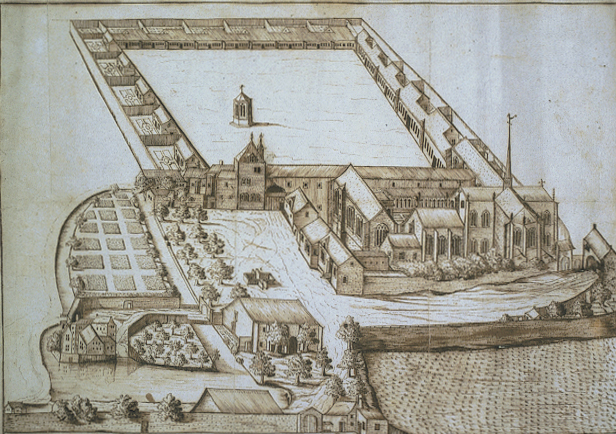 chartreuse de Champmol, 80 m north-east
Photo: , Public domain chapelle du centre hospitalier La Chartreuse de Dijon, 80 m north-east
Photo: Allie_Caulfield, CC BY 2.0 chapelle Saint-François-d'Assise de Dijon, 460 m north
Photo: François de Dijon, CC BY-SA 4.0- Parc des Carrières Bacquin, 540 m north
- chapelle Saint-Joseph-Cottolengo de Dijon, 650 m east
 église Sainte-Chantal de Dijon, 820 m south-east
Photo: François de Dijon, CC BY-SA 4.0- église de la Bienheureuse-Élisabeth-de-la-Trinité de Dijon, 820 m west
- Jardin de l'Arquebuse, 830 m east
Trails and rivers by puits de Moïse
- L'Ouche, a river of 98 km, 320 m away
Lakes nearby
- Kir Lake, its middle 1.5 km north-west
On these adventures
- Highlights of Dijon, 12 stops
- Statues & monuments, 21 stops
Good to know
Where is puits de Moïse?
puits de Moïse is in Dijon, France.
When was puits de Moïse built?
It was built in 1000.
Is puits de Moïse a listed monument?
Yes, it is a listed monument.
What is near puits de Moïse?
chartreuse de Champmol, 80 m north-east, chapelle du centre hospitalier La Chartreuse de Dijon, 80 m north-east and chapelle Saint-François-d'Assise de Dijon, 460 m north.
Is there a lake near puits de Moïse?
Kir Lake, 1.5 km north-west.
Sources: Wikipedia, Wikidata Q1541884.
Via Nostalgia Adventures: walk to heritage places, stamp your passport, follow trails, rivers and lakes.