


Nuremberg: from the castle to the Christkind's market
A 1.6 km walk from Nuremberg Castle down to the Hauptmarkt, where a teenage Christkind opens the Christmas market from the Frauenkirche balcony, and across the Pegnitz to St. Lorenz.
The story
Every two years Nuremberg elects a young person to be its Christkind, the Christ Child, in a white and gold costume with a tall golden crown and sleeves like wings. Candidates are between 16 and 19, and they need a head for heights: the Christkind opens the Christkindlesmarkt from the balcony of the Frauenkirche, secured by a rope. The election has taken place every two years since 1969, and the opening prologue, by Friedrich Bröger, has been spoken since 1948. It begins "Ihr Herrn und Frau'n, die Ihr einst Kinder wart", roughly "Ladies and gentlemen, who were once children".
This walk goes downhill from the castle to the market square and then across the river. Along the way it passes the houses, fountains and churches that frame the market, a "little town of wood and cloth" of about 180 stalls under red and white cloth.
The stops
- Nürnberger Burg. A group of medieval fortified buildings on a sandstone ridge above the old town.
- Albrecht-Dürer-Haus. A half-timbered house that was the home of the Renaissance artist Albrecht Dürer from 1509 until his death.
- Weinstadel. A medieval building of the former free imperial city, one of the best-known monuments in the northern old town.
- St. Sebald. One of the three great medieval churches of Nuremberg, together with the Frauenkirche and St. Lorenz.
- Altes Rathaus. The old town hall lies just east of the choir of St. Sebald.
- Schöner Brunnen. A fountain of about 19 m on the main market, built from 1385 to 1396. Its railing was forged in 1587, and a brass ring in it is turned for luck.
- Frauenkirche. On the eastern side of the Hauptmarkt. The Christkind speaks from its balcony.
- Fleischbrücke. A late Renaissance bridge over the Pegnitz.
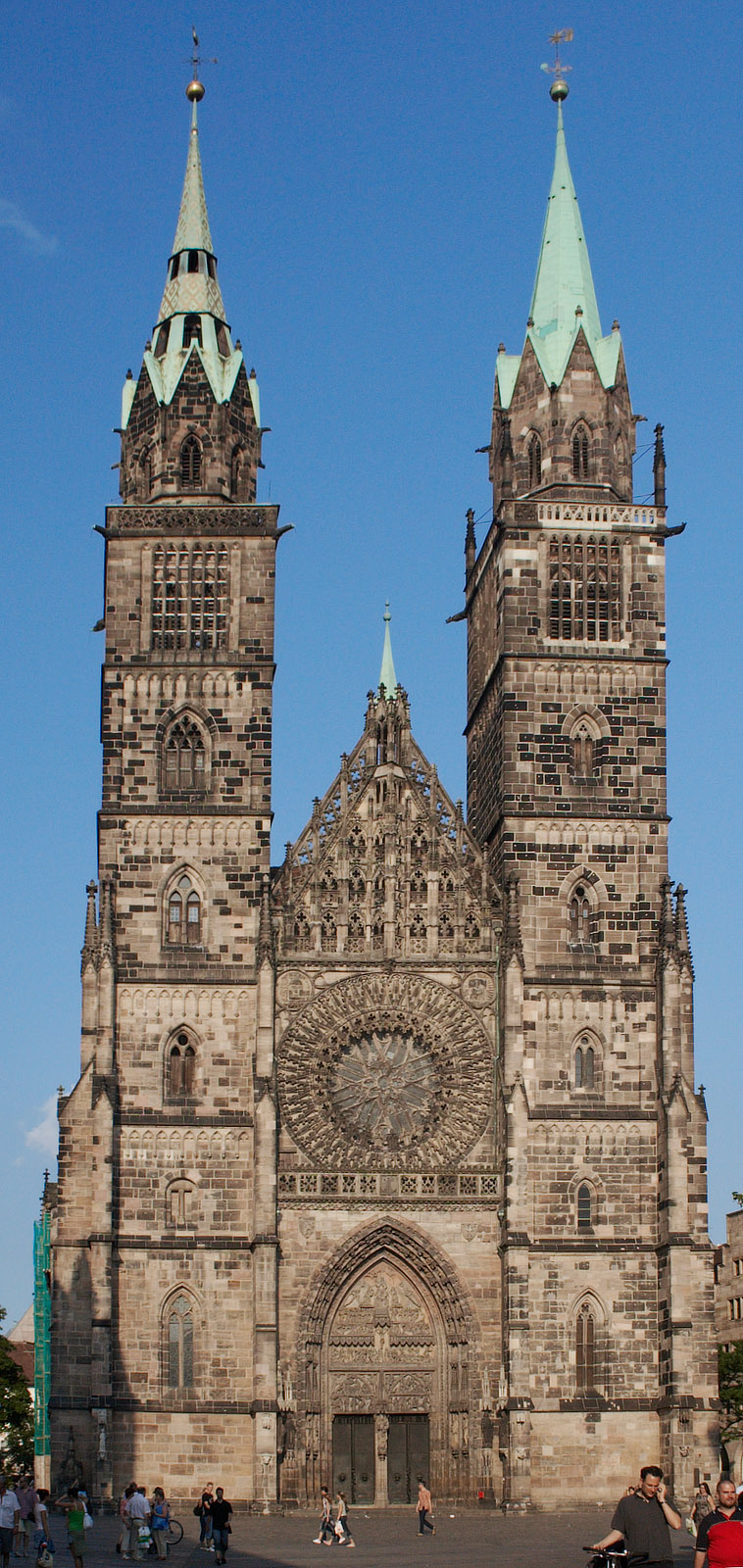
- St. Lorenz. A medieval church of the former free imperial city, dedicated to Saint Lawrence.
Practical notes
- Distance and time: 1.6 km on foot, about 1 hour with the stops.
- How the stops connect: from the castle down past Dürer's house to the Sebald quarter, then the Hauptmarkt with its fountain and church, and across the Fleischbrücke to St. Lorenz.
- Stamps: stand at each place to collect its stamp in the app.
- Market and churches: the market has set dates each year and the churches have their own hours. Check before you go.
The oldest record of the market, a small box marked "zum Kindles marck" in the Germanisches Nationalmuseum, dates from 1678.
Sources
- Via Nostalgia adventure: Nuremberg: the Christkind's market walk
- Christkindlesmarkt, Nuremberg (Wikipedia)
- Nürnberger Christkindlesmarkt (Wikipedia, de)
- Nuremberg Castle (Wikipedia)
- Albrecht Dürer's House (Wikipedia)
- Schöner Brunnen (Wikipedia, de)
- Christkind and market facts (City of Nuremberg)
Last updated